96: Ancient symbolic language in some other sandstone caves, published on the 02/03/2026
Written and published by Linden Alexander Pentecost, published on the 3rd of March 2026. This article is unrelated to and separate from any and all of my other publications, including those where related topics are discussed. No AI was used in this publication nor in any of my written works. The three photos in this article were also taken by me, Linden Alexander Pentecost. The photos like the written content have not been published before. The photo descriptions above the photos also contain important information no in the main text, and the main text and photos are also of course very important. This article was published only on this UK website www.bookofdunbarra.co.uk and was published in the UK and I the author am from the UK and live in the UK. I have published many other things recently here and on other websites, several of which also discuss other examples of ancient symbolic language, carvings and petroglyphs, The article before this on this website concerned petroglyphs in Arizona for instance, and two days ago I published about petroglyphs at Brennholtet in Narvik, Norway, on my newest website, and also on my Languages of Linnunrata website I have discussed many examples of ancient carvings and written language. I will also be publishing some different PDF-only books via this BookofDunBarra website quite soon (the website you are currently on), as well as some other articles or blog posts, some on other websites, but I am not yet sure when and which exactly I will publish. This article on this page contains a total of 1401 words.
Recently I have been writing rather a lot about petroglyphs and examples of symbolic language. And there is a reason for this. Many parts of this subject are largely untapped. On the sides of the River Eden in Cumbria, as I have described and discussed elsewhere, there are caves, caves associated with a Christian origin, usually with the implication that a monk or saint decided to create a meditation space.
We see some truth in these stories - that they were sacred, and that those seeking God and spirituality used to use them. But this is not their whole story. In my opinion, these caves are pre-Christian, they date from a time of interfacing with and communicating with spirit realms, through the use of sacred sounds and frequencies to unlock portals in the mind and beyond. A fair bit of this is referenced in the Christian traditions, which in many ways came from these earlier traditions. But the whole story is not told. These caves are overlain with assumption and partially falsified history. And many things about them, on closer inspection, reference and give context to this more ancient, pagan history.
St Constantine’s Cells are an example of one of these systems of sandstone caves cut into the sandstone cliffs of the River Eden in Cumbria. There are many other such caves nearby, which I have discussed elsewhere, including in an article on this website about Lacey’s Caves, and in another about the megalithic island, which is actually located opposite St Constantine’s Cells.
I have recently been looking even more deeply into the subject of petroglyphs, symbolic language and possible alphabetic language in prehistoric contexts in ancient Britain and elsewhere. This meant that when I came across some photos I took in St Constantine’s Cells years ago, I noticed in some of the photos a few examples of interesting symbolic language, at least one of which I think could be of prehistoric origin and certainly of pagan origin, the other symbols may have been created in a more Chrisitian time period, but their context and meaning may again be pre-Christian. These symbols are not the same as the possible cup marks I noticed outside of a different cave on the other side of the River Eden. The caves of St Constantine’s Cells, like other many other examples on the Eden and in nearby sandstone areas, show a clear sense of quite advanced geometry and shaping, which I think aligns in some way with acoustics. The presence of many “spirit doors” in these caves also I think implies the use of acoustics in these sites, to communicate across, and to open these doors. I do not personally remember whether or not I saw any examples of spirit doors in St Constantine’s Cells per-se, but most of these caves contain them, or appear themselves to go “nowhere” and could therefore have functioned as spirit doors. The photos showing these symbols at St Constantine’s Cells are below:
Photo below: what appears to be a serpent-carving located in one of the chambers in St Constantine’s Cells. This carving bares similarity to the possible serpent carving I found near Hodge Close in the Lake District, and also bares similarity to for example the serpent carving on the Aberlemno 1 or Aberlemno Serpent Stone, a Pictish stone imbued with Pictish symbolic or alphabetical (or a combination of the two) - language; and it bares a similarity to the serpent depiction on one of the megaliths on Signal Hill in Arizona, discussed in article 95: (the article published before this one) on this website. The serpent likely connects to the presence of the river outside of the caves, and to the symbolic connection between water and serpents, or the serpent carving may connect to the concept of “vision serpents” which give wisdom and spiritual insight to those visiting the Otherworld on a shamanic or shamanic-like journey. The presence of this serpent carving could therefore indicate that this place was a place where one could “see” through to the other realms, and would therefore be connected to shamanic or to shamanic-like practices. The serpent is such a common symbol and connects to a wide range of important universal concepts and spiritual themes, that it is difficult to say what precisely it represent here, but I am confident that it connects to one of the aforementioned possibilities. The serpent in European folklore was also not considered as in any way evil or bad in older times, and the Finns and some other peoples living around the Baltic Sea attach a more positive meaning to serpent symbolism to this very day, as to most Indigenous American peoples. The serpent is in many ways, the misunderstood guide to wisdom, the quiet the helper of the lonely seeker, a being older than religion and older than the spiritual suppression which has befallen humanity. Just above the serpent-like carving can be seen an M symbol, which is likely an example of a spiritual protection mark or VV mark, I have discussed these and many other examples of them elsewhere.
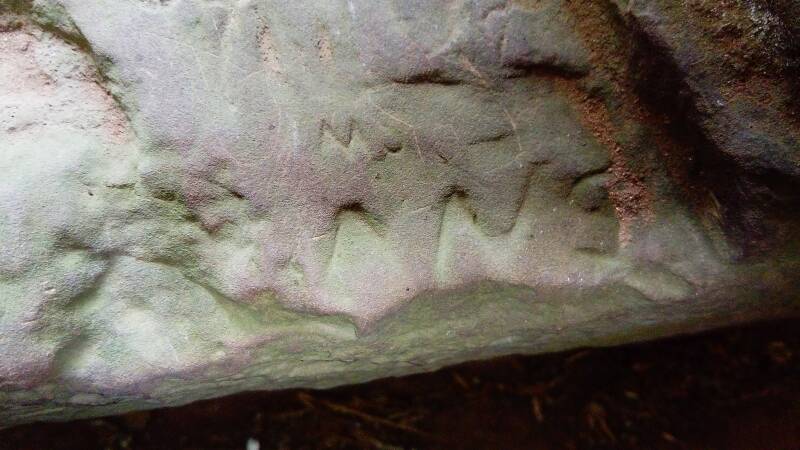
Photo below: some less-certain markings within St Constantine's Cells. The photo below shows what appear to be scratch marks, not so dissimilar to some of those seen at certain Neolithic sites, including the Langdale Axe Factory, which I have discussed recently (the carvings there), and have discussed other aspects of this elsewhere. Whilst the scratch markings shown below have no clear pattern, they do to me look like markings that were made meaningfully, and they do not appear to be connected to the more general pick-marks seen throughout these sites.
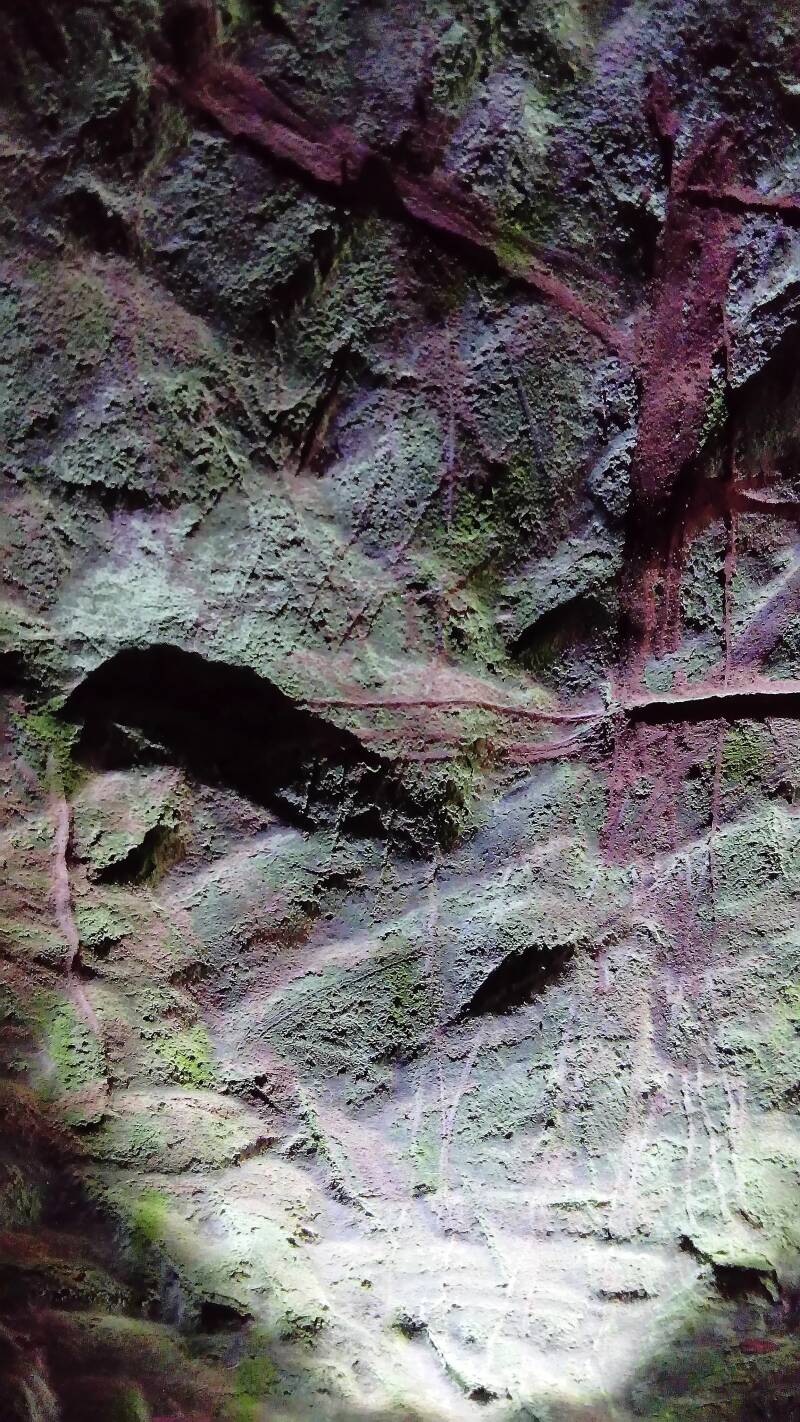
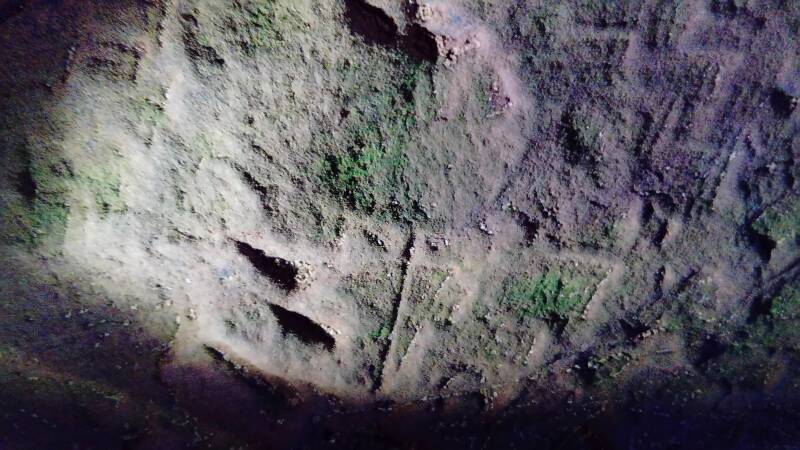
Photo below: when visiting St Constantine's Cells years ago, I noticed a lot of these zig-zag markings inside the chambers. I thought initially that they were just pick marks, and that the serpent-like carving shown in the first photo, might also just result from pick marks. But, on the other hand, I have showed these images to people, and a few people have said that both the serpent-like carving, and the similar-ish zig-zag carvings shown below, look too regular to have been produced by pick marks. Perhaps indeed the interior of this cave was once full of zig-zag markings, rather akin to some of the Neolithic burial tombs. This certainly needs further research. There are also many other interesting carvings in this cave which I did not notice on my visits to it.
I hope that this article was an interesting read. I hope to do further research into the carvings in and around these caves in the future. This article is dedicated to the ancestors who created these caves & is dedicated to my family & especially to my grandad who is also a lover of caves.